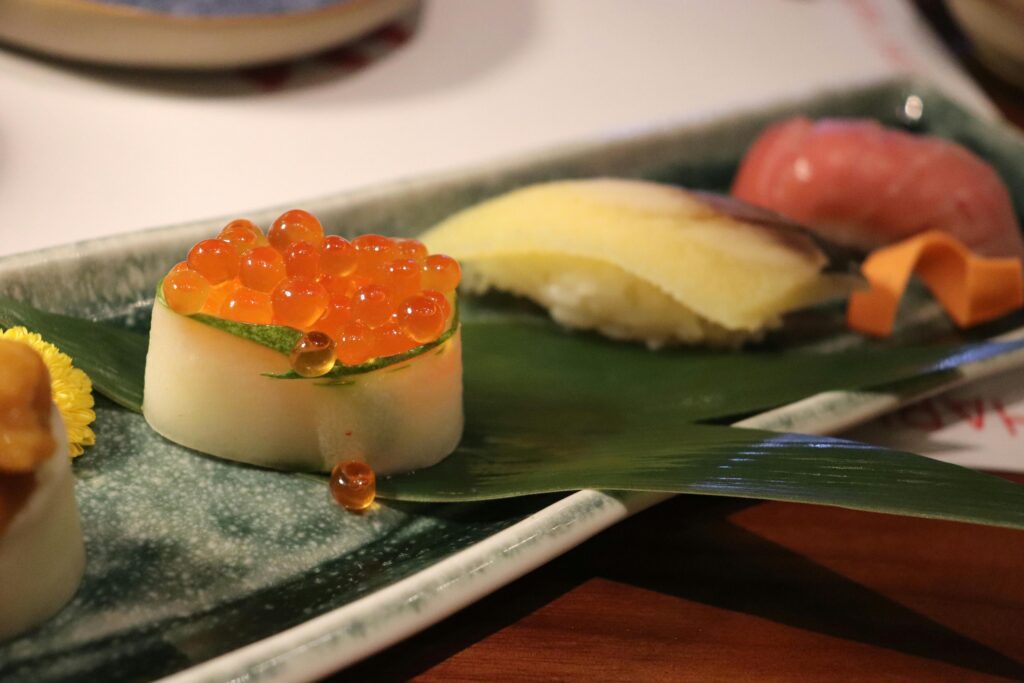
Why did your sushi restaurant see an increase in orders but a decrease in profits? The lunchtime orders doubled, but the profits at the end of the month were lower. After deducting the overtime pay for the staff, the profits from cancelled orders due to slow service, and the losses from returned orders caused by mistakes during the rush, it seems like all the efforts were in vain.
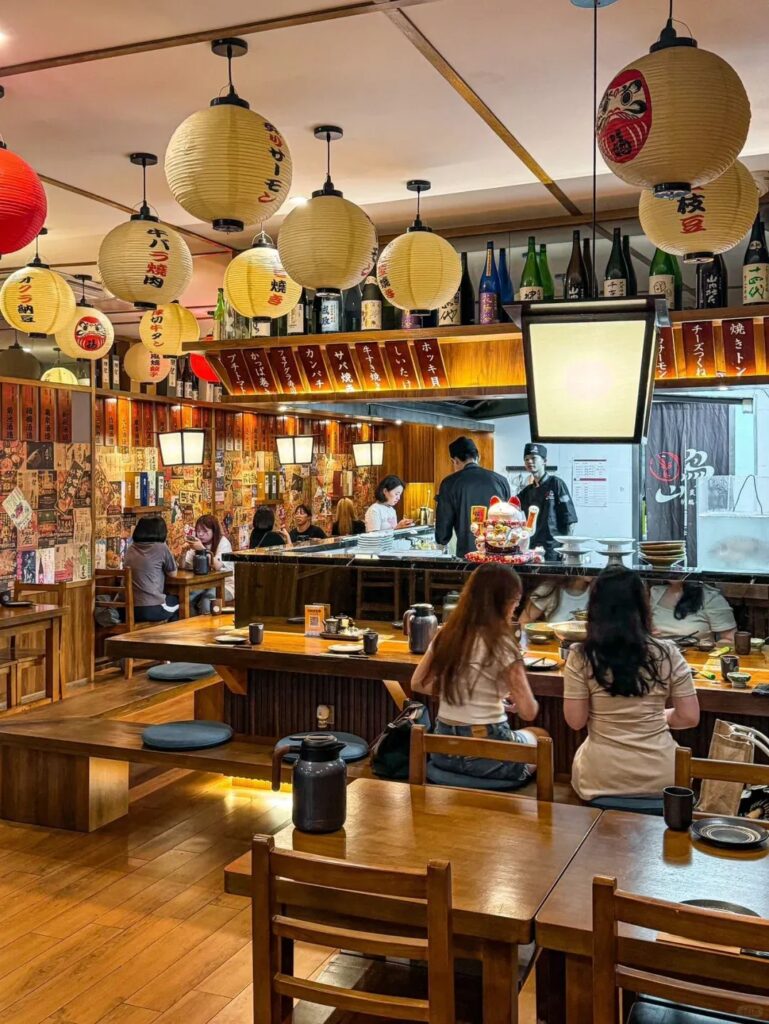
For small and medium-sized sushi restaurants, survival doesn’t merely depend on “making the food delicious enough”. Instead, it lies in being able to handle each order smoothly and flawlessly within the limited space and the hands of the staff. Today, we introduce three highly efficient sushi delivery services specifically designed for small and medium-sized sushi restaurants. They are small in size, inexpensive, yet can take on the heaviest, most exhausting, and most standardized tasks in the kitchen on your behalf.
Meal Preparation Machine
From “hands-on experience” to “one-click skin removal”
Meal Preparation Machine
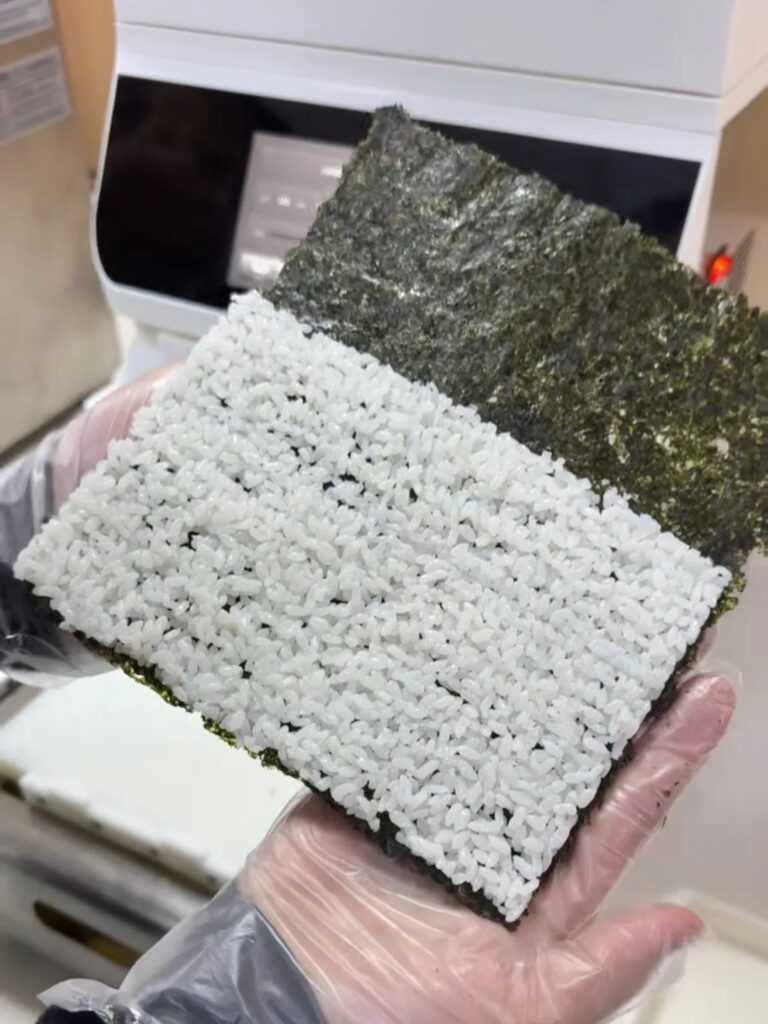
The rice coating for sushi is the most complicated step in the process of making sushi. Novices tend to apply it unevenly in thickness, while experienced ones may do it well but slowly. A single sheet of rice coating, if too thin, is prone to breaking; if too thick, it becomes overly greasy. If the density is incorrect, it will collapse when rolled up. This step is like a form of mysticism; it all depends on the master’s sense of touch with their hand.
But for a store to expand and replicate, it cannot always rely on “intuition”.
The emergence of the intelligent meal-preparation machine is not to replace manual cooking, but to set standards.
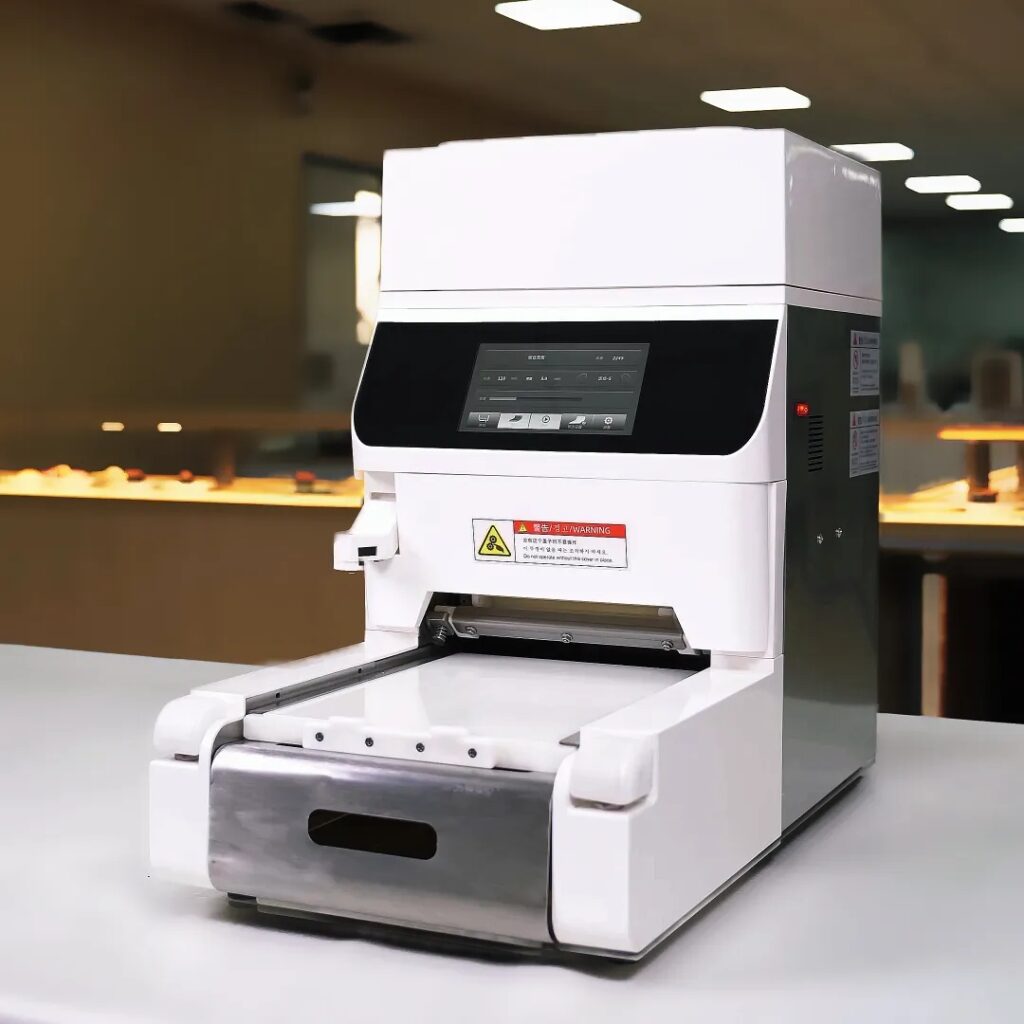
Its body is compact, and even a small kitchen with limited space can accommodate it. It can achieve a stable production capacity of 700 sheets per hour. 700 sheets are sufficient to cover the meal consumption of a small to medium-sized store during its peak hours, eliminating the need for frantic “rush work” before the peak period.
The most remarkable feature of this rice dispenser is its infrared sensing system. When you remove the rice, it dispenses the rice; when you stop your hand, it stops dispensing. It no longer requires you to take your hand off to press the switch. The machine and the user have formed a natural rhythm, truly achieving a continuous and uninterrupted meal dispensing process.
More importantly, the size, thickness and density of the rice sheet can all be preset on the screen. No matter which employee is on duty today, as long as the start button is pressed, every piece of rice sheet laid out will strictly replicate the optimal parameters you have set.
Rice ball machine
When “feel” is quantified, the essence of the product is revealed.
Rice balls are the backbone of sushi. If they are too loose, they won’t hold together; if they are too tight, they will feel like chewing on rice cakes.
For small and medium-sized stores, the rice ball production process is often the bottleneck in terms of efficiency. When orders keep pouring in, the fingers become red from constant pinching, but they still can’t keep up with the speed at which the printer prints out the orders. What’s more troublesome is that once they get busy, the rice balls produced vary in size, directly resulting in inconsistent sizes of the “battleships” and the “hand-held” products, seriously affecting the brand image.
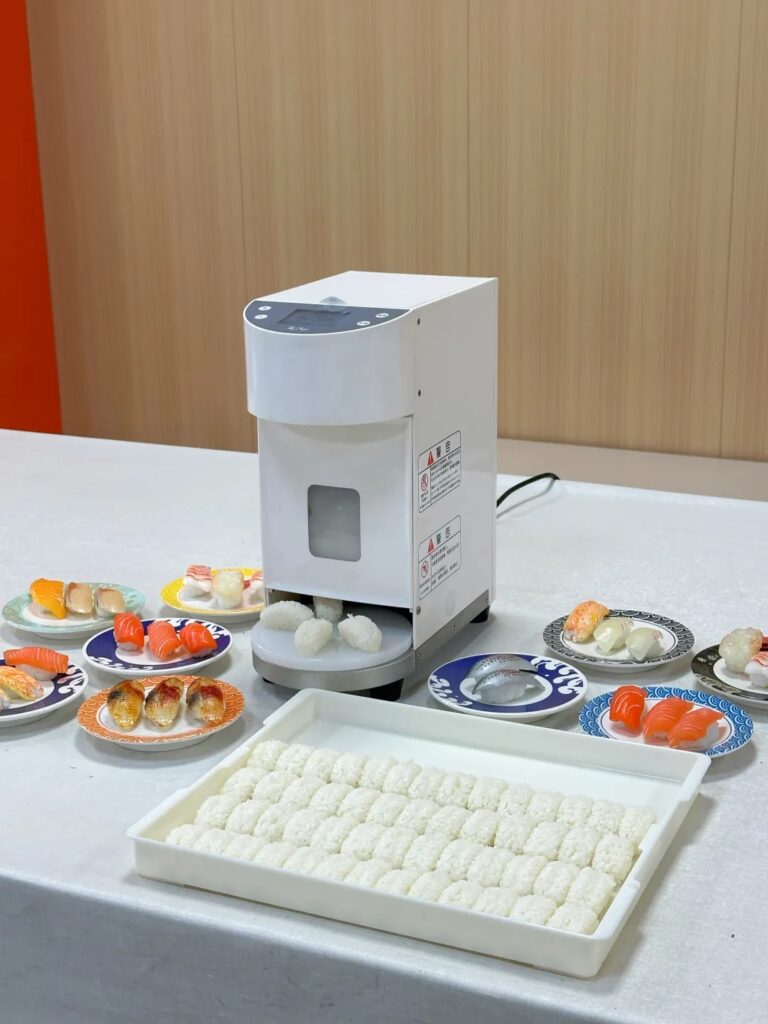
The design logic of this Ono Yutaka – Rice Roll Machine is to achieve the highest efficiency within the most compact size. With an hourly production capacity of 1800 rolls, it can easily handle any level of sudden surges in demand. It also features infrared sensing, making the operation simple and smooth.
Manual winding machine
Make “beginners” produce “advanced products”
Rolling sushi is probably the part of the kitchen process that requires the most patience.
If too much or too little of the ingredients are used, the roll will burst or look shabby. The uneven pressure during rolling causes the seaweed to wrinkle and the cut surface to be unattractive. All these variables make this category one where beginners are most likely to fail and experienced chefs spend the most time.
This manual rolling machine has solved this problem. It doesn’t require electricity connection. With a solid mechanical structure throughout and no complex electronic components, it means it is almost indestructible and can serve in the kitchen for many years.
Its operation is simple: put in the ingredients, press down, roll up, and it’s done.
With an efficiency of 3 to 5 rolls per minute, it far exceeds manual operations. What’s more, it has lowered the technical threshold for making sushi rolls to the minimum. Even a novice worker who has only been at the job for one day, as long as they know the placement order of the ingredients, can roll out sushi rolls that are uniformly firm, plump in shape, and comparable to those of experienced workers within five minutes.
These three devices are our efficiency solutions specifically designed for small and medium-sized catering professionals worldwide. We believe that true craftsmanship lies in using better tools to produce consistently excellent products.
Product link
Manual winding machine:https://www.sushitechgear.com/product/%e5%af%bf%e5%8f%b8%e9%93%ba%e9%a5%ad%e6%9c%ba%ef%bc%88%e7%84%95%e6%96%b0%e7%89%88%ef%bc%89/
Rice Roll Machine:https://www.sushitechgear.com/product/nigiri-robot-ftn-nrt/
Manual winding machine: